Storm Damage Roof Repair in St. Cloud from $350. After a storm, the fastest van in the street is not the safest choice. Four things to check before you sign. Free inspection and a written quote.
Exposure up on the mountain means this section sees wind the lower township does not, and sees it at the rake and ridge first. Same four checks apply to whoever turns up afterwards, and the higher and more awkward the roof, the more a doorstep price is a guess dressed as a quote.
Wind is what does the damage here, and it does it to the edges. A gust gets under a badly nailed course at a rake or an eaves and takes a strip off; a mature oak drops a limb across a valley; a ridge opens along its length. Making the building watertight quickly is the right instinct, and it is also the instinct that a door-knocker is counting on.


Wind damage here is edge damage: a strip lifted at a rake or an eaves, a ridge opened along its length, a limb across a valley. Getting the building watertight is quick and relatively cheap; the permanent repair gets priced afterwards, in writing, indoors. Expect access to appear as its own line. On a sloping wooded mountain site, where scaffold can stand and how materials reach the roof are real costs, and steep broken slopes take longer per square than their area suggests.
Catching it early, while the failure is still an edge and the deck beneath is dry. A slope that has been open through two storms is a bigger job than the same slope after one.
Anything that had weight behind it. A limb strike damages the deck under the covering, and that is not visible until the covering comes off -- which is exactly why it gets photographed before anything is closed up.
Whoever you use, the contract over $500 must be written and signed with a real business address on it, and must give you three business days to cancel. A price that expires this evening is not a price the law will let anyone enforce.
Elevation and exposure do the damage up here. Wind gets under the edges first, so rake and eaves detail earns its keep, and the slope of the plot itself decides how the scaffold and the materials get to the roof at all. Steep and broken-up roofs take longer per square than the area suggests.
A roof that is hard to stand on is a roof that is expensive to work on, and that is a fact about the site rather than a negotiating position.
If a quote fails the first two, the rest of it does not matter much.
Nobody knows how much deck has softened until the covering is off. A rate per sheet is an honest answer to that; a lump sum is a guess that will be revisited, usually upwards, once the roof is open.
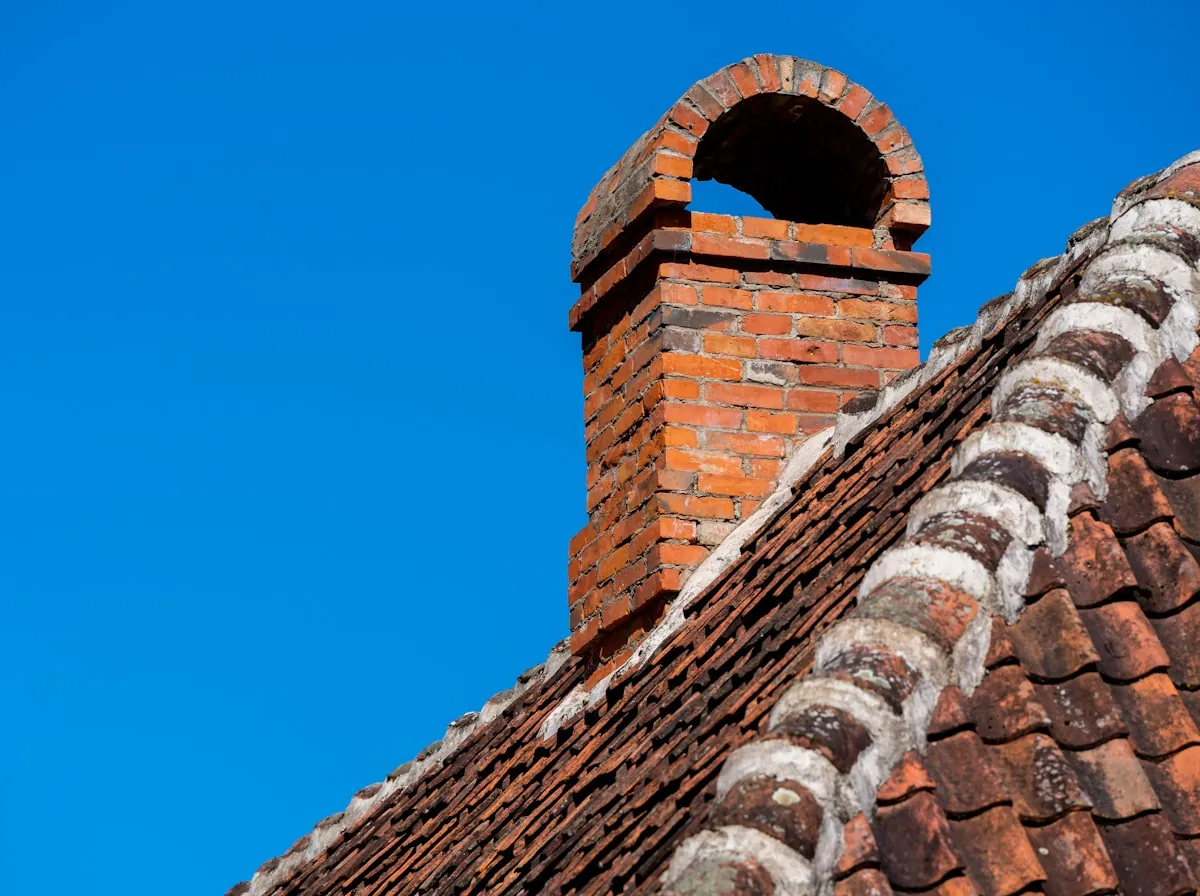
Most of what fails on a roof is not the field -- it is the eaves, the valleys, the chimney abutment and the penetrations. A quote that prices only area has not priced the parts that leak.
The cancellation notice is a legal requirement, not a courtesy. A contractor who includes it unprompted is telling you they expect the quote to survive you thinking about it overnight.
High ground on the First Mountain, where the replacement question starts with access rather than covering.
Wind damage up here is almost always an edge problem.
Slate on a steep exposed mountain roof is at its best and its most demanding: the pitch sheds water beautifully and the wind tests every fixing.
Flat sections on a mountain site are often dealing with water arriving from above rather than falling on them -- a low-slope deck beneath a large steep slope takes everything that roof sheds.
Half of an inspection up here is about the edges, because that is where exposure does its work, and half is about access -- knowing what it will actually take to get a crew and materials onto that roof is part of knowing what the work will cost..
One township, two trades. The mountain decides.
An 1850s planned community. Real slate, real frames.
Post-war and simple. The layer count is the variable.
Heavy canopy. Valleys, gutters and shaded slopes.
Denser and more multi-family. Unit count decides it.
Large, simple, accessible. Age is the question.
Inter-war stock. Board decking and narrow lots.
The questions this job turns on, answered up front.
It may well be -- storms do real damage and edges are where it starts. What the knock does not tell you is whether the person is registered, whether they will put a scope in writing, or whether the price survives tomorrow. Get the building covered, then get a second look from someone who did not raise it, then sign indoors.
Emergency cover, yes -- an open roof should be tarped today. A permanent repair, no. Over $500 the contract has to be written and signed and has to give you three business days to cancel, so nothing is lost by reading it overnight, and a contractor who objects to that is objecting to the law rather than to you.
An architectural asphalt roof runs $9,500 to $26,000 in New Jersey, and most 2,000 square foot houses land at $12,000 to $18,000 installed. Per square foot that is $5.50 to $8.00 for architectural shingle against $4.50 to $6.50 for three-tab. Natural slate is a different market entirely at $22 to $35 a square foot, and synthetic slate sits between them at $9 to $16.
For a standard asphalt roof on an average house, yes -- that is well above the $12,000 to $18,000 most 2,000 square foot houses cost here. But it is an entirely normal figure for natural slate, for a large house, or for a steep and complicated roofline with towers and dormers, which this township has a good deal of. The number on its own does not answer the question. What the quote itemizes does.
Labor, in most cases -- typically more than half the total, and the share rises with pitch and complexity because steep broken-up roofs take far longer per square foot than simple ones. The item that most often moves a final bill away from the quote is different: replacement decking, which nobody can measure until the old covering is off. That is why it belongs in the scope as a rate per sheet.
The registration number on the paperwork, not just the website. A written scope over $500, as New Jersey requires.