Roofing in West Orange, NJ with the written scope, the registration number and the three-day cancellation notice handed over before you are asked to decide anything.
One township, two price bands. Up the mountain the roofs are steep, broken up by dormers and valleys and often natural slate at $22 to $35 a square foot; down in the Valley and out west they are simple asphalt at $5.50 to $8.00. Before any of that, ask for the written scope with the registration number on it -- over $500 New Jersey requires one, and you get three business days to read it.
An architectural asphalt roof in New Jersey runs $9,500 to $26,000, and most 2,000 square foot houses land at $12,000 to $18,000 installed. Architectural shingle is $5.50 to $8.00 per square foot against $4.50 to $6.50 for three-tab. On a house you intend to keep, the heavier product is worth the difference; on one you are selling next spring, it may not be, and a quote that does not ask which you are doing has not asked enough.

REQUEST A QUOTE
Complete the form and describe the work you need help with.


Those are New Jersey figures for an architectural asphalt roof, and most 2,000 square foot houses land at $12,000 to $18,000 installed. In West Orange the number moves most with which side of the mountain the house is on: a steep, broken up First Mountain roof is a different job from a post-war slope out towards Pleasantdale. Which side of the mountain the house sits on moves a West Orange quote further than the choice of covering does. Steep, broken-up First Mountain roofs and simple Valley slopes are different trades at different day rates, and a number quoted from experience of one is wrong about the other.
A simple roof shape, a driveway to work from, a deck that turns out sound, and a detached one- or two-family house -- which in most of this township means ordinary maintenance and no permit to wait on.
Pitch and geometry first: dormers, valleys and turrets add time per square that area alone never shows. Then a sloping wooded site that has to be staged, board sheathing that has to be made good, and a second covering that has to come off.
How decking replacement is priced. It belongs in the scope as a rate per sheet, because nobody knows how much has softened until the covering is off, and a lump figure is a guess in one direction or the other.
The related lanes, with a range against every one.
Most repairs here land between $350 and $1,800, and the wide spread is the point: replacing a few courses is not the same job as finding a leak.
Wind is what does it here, and it does it to the edges.
Natural slate runs $22 to $35 a square foot installed in New Jersey and synthetic $9 to $16.
Flat roofing here is $5 to $14 a square foot, EPDM at $5 to $9 and TPO at $6 to $12.
Most people book one because somebody told them the roof needed work -- a surveyor, a neighbor's contractor, or a stranger who knocked.
Three of them you can do standing in your own driveway, before anybody gets a ladder off a roof rack. Apply them here first.
N.J.A.C. 13:45A-17.11 requires the registration number on BOTH sides of a commercial vehicle used for home improvement work, with "HIC reg. #" in lettering an inch high. An unmarked van is not a matter of taste or opinion -- it is a vehicle that does not comply with the rule it is supposed to.
The same regulation puts that number on every advertisement, business document, contract and piece of correspondence distributed in this state. A flyer or a door hanger without one was produced in breach of it, whatever else is printed on it.
Over $500, N.J.A.C. 13:45A-16.2 requires it in writing and signed by both parties, setting out the work and the materials and giving the contractor's legal name and business address. A first name and a mobile number is not a business address.
That contract must carry a bold Notice to Consumer giving you three business days to cancel, running to midnight of the third business day after you receive your copy. Anyone telling you the price is only good today is describing something the law will not enforce for them.
Free inspection, a written scope with the registration number on it, and three days to decide.
Tell us the address, roughly when the roof went on if you know, and what made you call. Whether this started with a leak, a survey or somebody at the door changes what is worth looking at first, and the last of those three changes it most.
Both together. The slope and the details that actually fail on the outside; on the inside the layer count, the deck type, old water tracks and daylight. On the mountain sections that survey also settles what the frame will carry, which is what decides whether natural slate is even an option.
A document with the legal business name, the address and the registration number on it, the work described in plain language, and the three-day cancellation notice included without being asked for. Read it indoors. Nothing about it expires this evening.
Materials confirmed before they arrive, the construction office dealt with where a permit is actually required, and a before-and-after set that is yours whatever you decide to do next.
If a quote fails the first two, the rest of it does not matter much.
Not on a website footer -- on the quote you were handed. New Jersey requires it there, and its absence tells you something before you have read a single price.
The regulation asks for the contractor's legal name and business address in the contract. Anything that resolves only to a mobile number is a quote you cannot follow up on if the work goes wrong.
Nobody knows how much deck has softened until the covering is off. A rate per sheet is an honest answer to that; a lump sum is a guess that will be revisited, usually upwards, once the roof is open.
Most of what fails on a roof is not the field -- it is the eaves, the valleys, the chimney abutment and the penetrations. A quote that prices only area has not priced the parts that leak.
The cancellation notice is a legal requirement, not a courtesy. A contractor who includes it unprompted is telling you they expect the quote to survive you thinking about it overnight.
Search for roofing in West Orange and a striking share of what comes back is not about roofs at all. It is about checking the contractor: how to verify a registration, what a written contract has to contain, and how long you have to change your mind after signing. That is a market asking a fair question, and the answer is more concrete than most people realize.
New Jersey makes four things checkable. The registration number has to be on both sides of a commercial vehicle used for home improvement work, in lettering an inch high, and on every advertisement, contract and piece of correspondence -- that is N.J.A.C. 13:45A-17.11, and an unmarked van is not a matter of opinion. Over $500 the contract has to be in writing and signed by both parties under N.J.A.C. 13:45A-16.2, carrying the legal business name and a real street address rather than a first name and a mobile number. And it has to include a bold notice giving you three business days to cancel, running to midnight of the third business day after you receive your copy.
Three of those four you can check standing in your own driveway, before anyone gets a ladder off the roof rack. The fourth takes as long as it takes to read one page. Apply them to us exactly as readily as to whoever knocked -- that is the entire point of putting them on the front of a roofing website, and it is the only trust claim on this subject that costs the person making it anything.

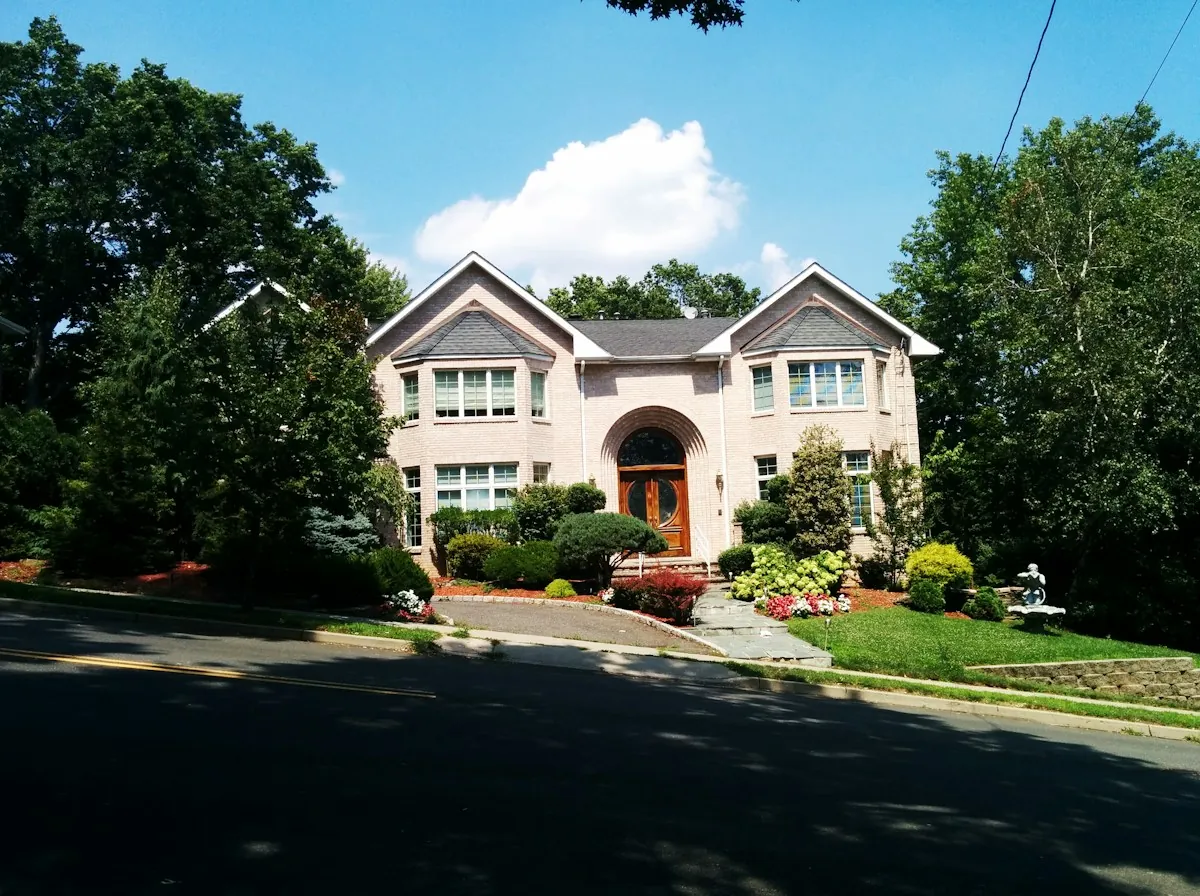
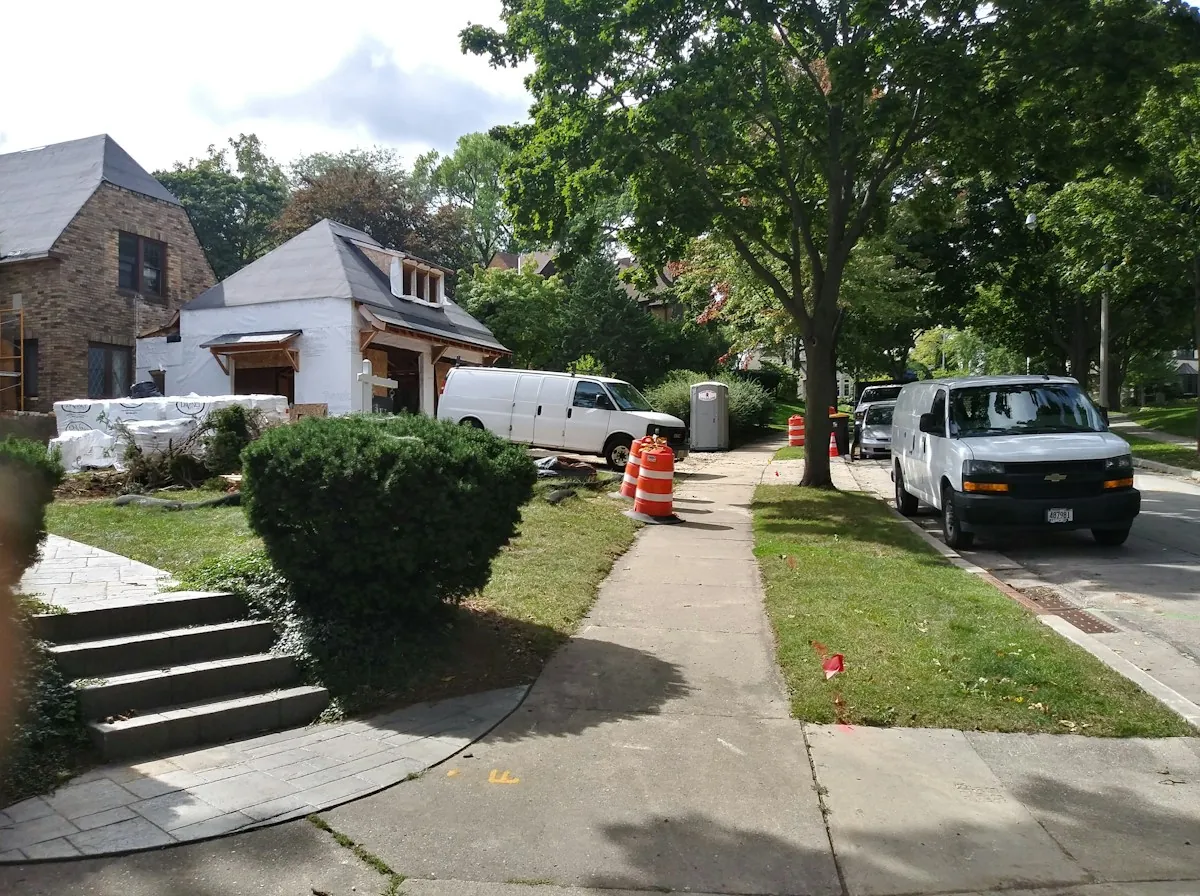
An Essex County township that climbs the First Watchung Mountain, developed in bands as the road and then the commuter routes pushed west and up the slope. Two distinct stocks in one township: Victorian, Tudor and estate housing on the mountain sections, later and simpler detached and semi-detached housing in the Valley and out west, with a fair amount of post-war development between.
The mountain decides the job here. Up the slope, roofs are steep, broken up by dormers and valleys, and often natural slate at $22 to $35 a square foot. Down in the Valley they are simpler asphalt at $5.50 to $8.00. Quoting one from experience of the other goes wrong in both directions.
Most of this township is detached, so a roof covering replacement is usually ordinary maintenance with no permit at all -- and the office that decides is the township's own.

West Orange section by section, plus Livingston and Verona. The mountain divides this township into two different kinds of roof, and the price bands are not the same.
An 1850s planned community. Real slate, real frames.
Post-war and simple. The layer count is the variable.
High and exposed. Edges first, access second.
Heavy canopy. Valleys, gutters and shaded slopes.
Denser and more multi-family. Unit count decides it.
Large, simple, accessible. Age is the question.
Inter-war stock. Board decking and narrow lots.
The awkward questions, taken in order.
Only where it has actually softened, and as a rate per sheet in the written scope rather than a lump guess. On the older stock here the deck is frequently board sheathing rather than plywood, which holds a nail differently -- so it is established by lifting and looking before anything is specified on top of it.
Only over one existing layer, on a sound deck. Two coverings is the practical ceiling, and an overlay buries the eaves detail -- so if there was never an ice barrier down there, an overlay guarantees there still is not. In this climate that is the wrong saving.
In New Jersey four of them are checkable rather than a matter of impression. The registration number appears on both sides of the van in inch-high lettering and on every advertisement and document, under N.J.A.C. 13:45A-17.11. Any contract over $500 is in writing and signed by both parties, with the legal business name and a street address on it. And it carries a bold notice giving you three business days to cancel. A contractor who meets all four may still be wrong for the job, but one who fails them is not a judgment call.
Usually not, on a house. Replacing the roof COVERING on a detached one- or two-family dwelling is ordinary maintenance under N.J.A.C. 5:23-2.7 -- no permit, no notice, no inspection. Three or more units, an attached building, or anything structural underneath the covering is a different answer, and the office that decides is your own municipality's construction office, not the state's. West Orange is detached enough that no permit is the normal outcome here.
An architectural asphalt roof runs $9,500 to $26,000 in New Jersey, and most 2,000 square foot houses land at $12,000 to $18,000 installed. Per square foot that is $5.50 to $8.00 for architectural shingle against $4.50 to $6.50 for three-tab. Natural slate is a different market entirely at $22 to $35 a square foot, and synthetic slate sits between them at $9 to $16.
Free inspection, a written scope with the registration number on it, and three days to think about it before anything is agreed.