Roof Repair in the Gregory section from $150. $350 to $1,800 covers most of it -- and a repair that keeps coming back was never a covering problem. Free inspection and a written quote.
Under mature oaks the recurring repair is not a hole -- it is a valley. Leaf litter dams it, the water backs up under the courses either side, and the ceiling gets wet several feet from anything that looks damaged. Clearing it is maintenance; detailing it so it clears itself is the repair.
Most roof repairs in this market fall between $350 and $1,800, with genuinely minor work from about $150. That range is wide because it covers two different things: replacing a few courses that came off in a gust, and chasing a leak whose source is nowhere near where the water appears.


Most repairs land between $350 and $1,800, with genuinely minor work from about $150. The spread is wide because it covers two different jobs: putting back a few courses that came off, and finding a leak whose source is nowhere near where the water is showing. Canopy does the work here. Debris-packed valleys, gutters that fill between clearings and shaded slopes that never dry mean the roof often needs attention years before its age would suggest -- and the valley and gutter detail is where the money is best spent.
A visible, bounded failure on an accessible slope -- a lifted course, a split pipe boot, a length of flashing. Those are diagnosed from the roof in minutes and fixed the same day.
A leak that has already been patched. Tracing water that is tracking along a rafter before it shows takes time in the roof space, and the repair is then at the cause rather than at the convenient place above the stain.
Two coverings already up there, granule loss across the field, or deck that gives underfoot. At that point a repair buys a season, and we will say so in writing even though the bigger job is the one we would rather have.
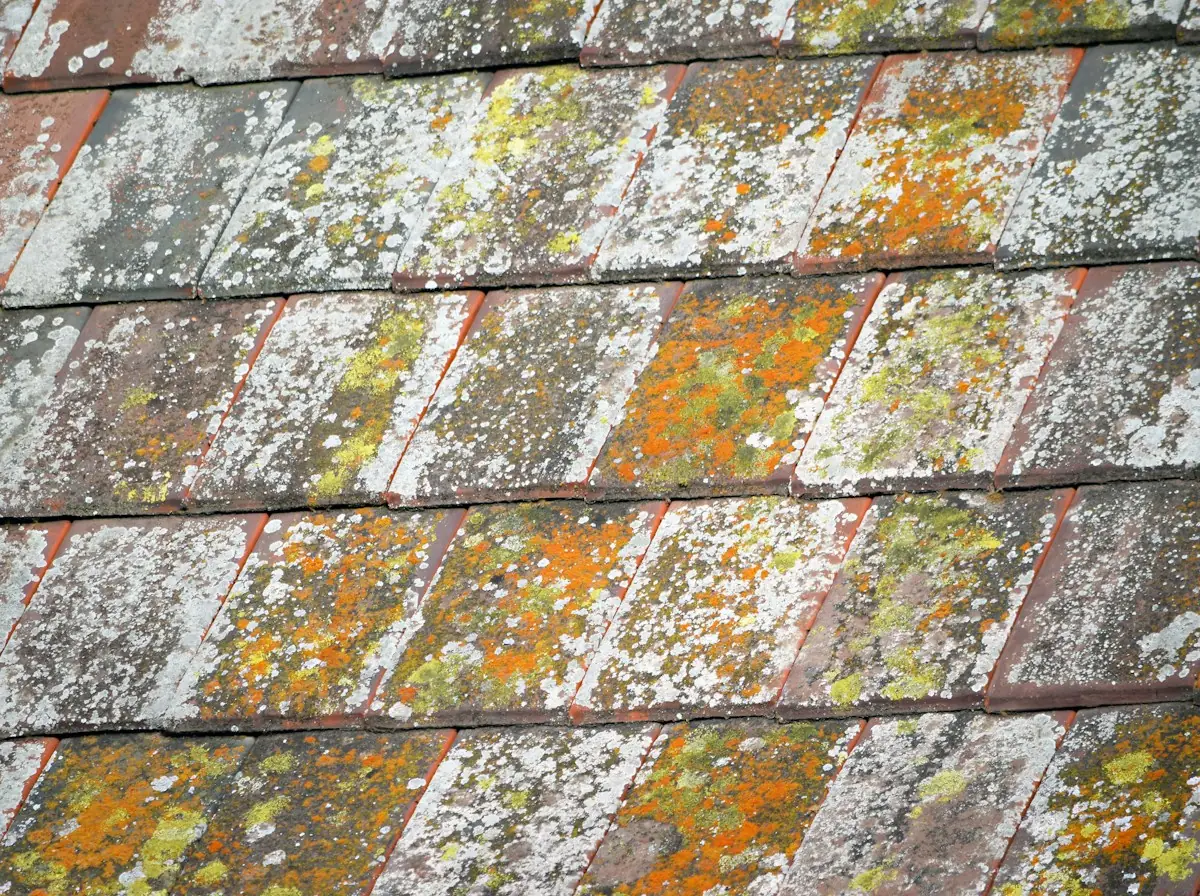
Trees are the specific problem here. Mature canopy over a roof means debris in the valleys, gutters that fill faster than they drain, and slopes that stay damp long enough to grow moss. None of that is dramatic, and all of it shortens a covering that would otherwise have years left.
On a shaded street, the gutter run and the valley detail are worth more attention than the choice of shingle.
If a quote fails the first two, the rest of it does not matter much.
The regulation asks for the contractor's legal name and business address in the contract. Anything that resolves only to a mobile number is a quote you cannot follow up on if the work goes wrong.
Most of what fails on a roof is not the field -- it is the eaves, the valleys, the chimney abutment and the penetrations. A quote that prices only area has not priced the parts that leak.
The cancellation notice is a legal requirement, not a courtesy. A contractor who includes it unprompted is telling you they expect the quote to survive you thinking about it overnight.
Substantial older houses under heavy canopy, which changes what a replacement has to solve.
Under this much canopy the storm damage is as likely to be a limb as the wind itself.
Slate under heavy tree cover grows moss and holds damp on the shaded slopes, which does not harm the stone but does work on everything holding it.
A flat roof under mature trees is a debris trap, and a blocked outlet on a low-slope deck does not overflow harmlessly the way a gutter does -- it ponds until it finds a seam.
Under this canopy the inspection pays attention to the shaded slopes, the valleys and the gutter runs, because that is where a roof in this section ages first.
One township, two trades. The mountain decides.
An 1850s planned community. Real slate, real frames.
Post-war and simple. The layer count is the variable.
High and exposed. Edges first, access second.
Denser and more multi-family. Unit count decides it.
Large, simple, accessible. Age is the question.
Inter-war stock. Board decking and narrow lots.
The questions this job turns on, answered up front.
Stop patching and survey the roof space. Water entering at a chimney or a valley can track several feet along a rafter before it shows on a ceiling, so a repair directly above the stain fixes nothing. Two failed patches is strong evidence that the entry point was never where the work was done.
When the covering away from the failure is also going -- brittle, losing granules, lying unevenly -- or when there are already two layers, or when the deck gives underfoot. At that point a repair buys a season, and it should be presented to you as buying a season rather than as a fix.
For a standard asphalt roof on an average house, yes -- that is well above the $12,000 to $18,000 most 2,000 square foot houses cost here. But it is an entirely normal figure for natural slate, for a large house, or for a steep and complicated roofline with towers and dormers, which this township has a good deal of. The number on its own does not answer the question. What the quote itemizes does.
Architectural asphalt typically gives 20 to 30 years here and three-tab 15 to 20, with freeze and thaw at the eaves doing more to shorten both than sunlight does. Natural slate outlasts the rest by a wide margin -- often a century or more -- which is why so many slate roofs in this area need their nails, valleys and flashings attended to rather than the stone replaced.
A 1,200 square foot roof in architectural shingle works out at roughly $6,600 to $9,600 on New Jersey rates, before anything the roof itself adds. Note that 1,200 square feet of FLOOR is not 1,200 square feet of roof: pitch, overhangs and dormers mean the roof area on a house that size is commonly a third larger again, which is a frequent source of quotes that look inexplicably far apart.
The registration number on the paperwork, not just the website. A written scope over $500, as New Jersey requires.